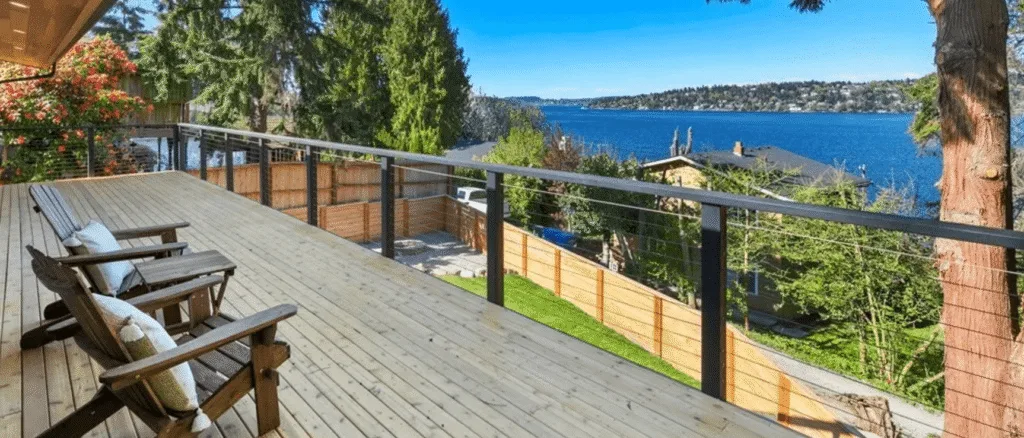
If you're researching deck costs in Seattle, you've already noticed that the numbers vary wildly depending on where you look. National averages are a starting point — but they don't account for what actually drives pricing here: hillside lots in Queen Anne and Magnolia, Seattle DCI permitting timelines longer than anywhere else in King County, and site conditions that make builds in this city more complex than the Eastside suburbs.This guide covers real installed cost ranges for deck projects across Seattle neighborhoods, broken down by material, project size, lot type, and the add-ons that move the number most. For general Pacific Northwest pricing across King County and Pierce County, see our
full deck replacement cost guide — this article focuses specifically on what drives costs in Seattle.
How Much Does a Deck Cost in Seattle? Quick Answer
Deck installation in Seattle runs $37–$74 per sq ft for most standard builds, with flat-lot ground-level projects starting at $37–$45 and elevated hillside builds in Queen Anne, Magnolia, and Capitol Hill running $55–$80+. Seattle DCI permits add $800–$2,500 depending on project value. Demolition of an existing deck adds $3–$8 per sq ft. Total project costs for a standard 300–400 sq ft composite deck in Seattle typically land between $18,000 and $45,000 all-in.
Seattle Deck Costs vs. the Rest of King County
Seattle consistently prices 20–35% higher than Eastside cities like Bellevue, Kirkland, and Redmond for equivalent deck builds. Three factors drive that gap — and they're all Seattle-specific.
1. Seattle DCI permitting costs more and takes longer. Deck permits in Seattle go through the Seattle Department of Construction & Inspections. Fees are calculated on project value and run $800–$2,500 in 2026 — compared to $500–$1,500 in Bellevue or Kirkland. Approval timelines run 4–8 weeks, versus 2–4 weeks in most Eastside cities. That timeline has to be factored into the project schedule from day one, not discovered mid-build.
2. Seattle's hillside lots require structural engineering that flat-lot builds don't. Queen Anne, Magnolia, Capitol Hill, and Beacon Hill have significant slope. Elevated decks on these lots require taller post systems, engineered footings appropriate for soil and slope conditions, and drainage plans that Seattle DCI reviews separately. These requirements add $8–$20 per sq ft over a flat-lot build of the same size and material — sometimes more on steep Queen Anne or Magnolia sites where crane access for materials may be needed ($1,000–$3,000 per day).
3. Seattle's labor market runs above the regional average. Journeyman carpenter wages in the Seattle metro area run $38–$52 per hour — 25–40% above the national average and meaningfully above Eastside rates. Labor typically accounts for 40–55% of total deck project cost, so that premium compounds across the whole project.
Seattle Deck Cost by Material (2026 Installed Prices)
These are honest installed cost ranges for licensed, permitted projects in Seattle — not material-only costs, not national averages.
| Material | Installed Cost per Sq Ft | Lifespan | Maintenance | Best For |
|---|
| Cedar | $34–$45 | 15–25 years | High — biannual sealing | South-facing flat sites in Beacon Hill, Columbia City, West Seattle |
| Trex Composite | $40–$55 | 25–30 years | Low — annual cleaning only | Shaded lots in Ravenna, Wedgwood, standard Capitol Hill builds |
| TimberTech AZEK | $50–$65 | 25–50 years | Very low | Elevated hillside builds in Queen Anne, Magnolia, Capitol Hill |
| PVC | $55–$74 | 30–50 years | Very low — no wood fiber | North-facing chronically shaded lots, waterfront proximity |
| Elevated hillside build (any material) | $55–$80+ | Depends on material | Depends on material | Queen Anne, Magnolia, Capitol Hill slope lots |
Note on cedar in Seattle: Cedar is the right choice only for south-facing, well-drained flat lots with good sun exposure. On chronically shaded north-facing lots — common in Ravenna, Wedgwood, and the north slopes of Queen Anne — cedar deteriorates significantly faster than composite or PVC, which effectively makes it the higher-cost option over a 15-year horizon once you factor in maintenance and earlier replacement. See our
full decking material comparison for a side-by-side breakdown including 20-year total cost.
Note on Trex specifically: Trex is the most widely installed composite in Seattle and the standard recommendation for most shaded or moderate-condition lots. Our
Trex decking cost guide breaks down pricing by product line (Select, Enhance, Transcend) so you can evaluate options before getting bids.
Seattle Deck Cost by Project Size (2026)
These estimates assume a composite build (Trex or TimberTech) on a flat or moderate-slope lot with Seattle DCI permitting, standard railings, and demolition of an existing deck included.
| Deck Size | Approx. Sq Ft | Estimated Total Cost | Notes |
|---|
| 10′ × 10′ | 100 sq ft | $5,500–$10,000 | Ground level, flat lot, basic railing |
| 12′ × 16′ | 192 sq ft | $10,000–$18,000 | Standard single-level, composite |
| 16′ × 20′ | 320 sq ft | $16,000–$30,000 | Standard single-level, composite or PVC |
| 20′ × 20′ | 400 sq ft | $20,000–$38,000 | Larger single-level, standard complexity |
| 20′ × 20′ elevated hillside | 400 sq ft | $28,000–$50,000+ | Queen Anne / Magnolia slope lot, engineered footings |
| Multi-level custom build | 400–600 sq ft | $35,000–$65,000+ | Multiple levels, cable or glass railing, complex site |
Add
15–30% to any of these figures for premium railings (cable or glass), built-in seating, integrated lighting, or pergola additions.
What Adds Cost on Seattle Deck Projects Specifically
Seattle DCI Permits
Permits in Seattle are priced on project value — not a flat fee. Rough 2026 estimates:
| Project Value | Estimated Permit Fee | Typical Approval Timeline |
|---|
| $10,000–$25,000 | $600–$1,200 | 4–6 weeks |
| $25,000–$60,000 | $1,200–$2,500 | 6–8 weeks |
| $60,000+ | $2,500+ | 8+ weeks |
Contractors who submit complete permit applications from day one avoid the revision loops that extend these timelines by 2–4 additional weeks. This is one of the most important operational questions to ask when evaluating bids in Seattle.
Hillside Lots — Queen Anne, Magnolia, Capitol Hill
Elevated decks on Seattle's hillside lots require:
- Taller post systems — often 8–14 feet vs the standard 3–4 feet on flat lots
- Engineered footings appropriate for slope, soil type, and load — typically adds $2,000–$6,000
- Drainage plans reviewed separately by Seattle DCI
- Possible crane access for material delivery on steep sites — $1,000–$3,000 per day
Total premium for a hillside lot vs. a flat-lot build of identical size and material:
$8,000–$20,000 depending on slope severity and structural complexity.
Railings
Washington State code requires railings on decks 30 inches or more above grade. Seattle's hillside decks almost always require railings. Cost per linear foot installed:
| Railing Type | Cost per Linear Foot (Installed) |
|---|
| Pressure-treated wood | $35–$55 |
| Cedar | $45–$75 |
| Composite | $60–$100 |
| Cable (stainless steel) | $90–$180 |
| Glass panels | $140–$250 |
Cable and glass railings have become the standard spec in higher-end Seattle neighborhoods — Queen Anne, Magnolia, Capitol Hill, and Madison Park — where views and architectural integration justify the premium. A standard deck perimeter of 50–60 linear feet with cable railing adds $4,500–$10,800 to the project.
Demolition of Existing Deck
$3–$8 per sq ft for a standard wood deck. Elevated decks with complex framing or limited access run toward the high end. A 300 sq ft deck demolition runs $900–$2,400 depending on site conditions.
Stairs
$1,500–$4,000 per flight depending on height, material, and whether independent footings are required. Stair railings add to this — stair sections cost more per linear foot than level sections because they require handrails in addition to the railing system.
Built-In Features
| Feature | Typical Added Cost |
|---|
| Built-in bench seating | $65–$85 per linear foot |
| Low-voltage deck lighting | $1,000–$3,500 installed |
| Pergola or shade structure | $5,000–$15,000+ |
| Under-deck waterproofing system | $3,000–$8,000 |
Seattle Deck Costs by Neighborhood
Not all Seattle neighborhoods cost the same to build in. Slope, shade, site access, and proximity to water all affect the final number.
| Neighborhood | Typical Lot Conditions | Cost Premium vs. Flat Lot | Recommended Material |
|---|
| Queen Anne | Steep slope, elevated builds, views | High (+$10,000–$20,000) | TimberTech or PVC |
| Magnolia | Hillside + some waterfront proximity | High (+$8,000–$18,000) | PVC or TimberTech |
| Capitol Hill | Mixed — slope varies by block | Medium (+$4,000–$12,000) | Trex or TimberTech |
| Beacon Hill | South-facing, good sun, moderate slope | Low–Medium (+$2,000–$8,000) | Cedar or Trex |
| Ravenna / Wedgwood | Flat to moderate, shaded, north-facing | Low (flat lot, but material upgrade required) | Trex or TimberTech — cedar not recommended |
| Ballard / Fremont | Mostly flat, some access challenges | Low–Medium (+$1,000–$5,000) | Cedar or Trex |
| Columbia City / West Seattle | Good sun, flat to moderate slope | Low | Cedar or Trex |
Repair vs. Replace — The Seattle-Specific Consideration
On Seattle's hillside lots, older decks in Queen Anne and Magnolia were often built before current structural requirements. Even decks that look acceptable on the surface may fail a Seattle DCI inspection at resale — which forces a full rebuild at the worst possible time. If you're within 2–3 years of selling, a professional structural assessment now is almost always worth the cost.The general thresholds for replacement over repair apply in Seattle as they do everywhere: more than 30% of structural framing compromised, ledger connection failing, or repair quotes approaching 50–60% of replacement cost. Our
repair vs. replace guide walks through the full decision framework with real cost thresholds — and our
common deck problems guide covers the specific warning signs to look for before calling anyone.
How to Get an Accurate Deck Cost Estimate in Seattle
National online calculators consistently underestimate Seattle deck costs because they don't account for DCI permitting, hillside lot complexity, or Seattle's labor market. The only way to get an accurate number is an on-site assessment by a licensed contractor who knows the Seattle market specifically.When comparing bids, make sure every quote includes:
- Fully itemized materials (product name, grade, linear footage)
- Seattle DCI permit fees and timeline
- Demolition and haul-away if applicable
- Railing system specified with linear footage and material
- Any slope engineering or footing work required
A single-number bid without these line items is not a real quote — it's a number that will change mid-project.
Ready to Get a Deck Cost Estimate in Seattle?
Orca Roofing & Exteriors builds and replaces decks across Seattle — Queen Anne, Magnolia, Capitol Hill, Beacon Hill, Ballard, Fremont, Ravenna, Wedgwood, Columbia City, and West Seattle. We handle the full Seattle DCI permit process, assess your specific lot and slope conditions on the first visit, and provide fully itemized estimates before you commit to anything. No single-number bids, no surprises mid-project.
Learn more about our Seattle deck installation and replacement services →