Brava composite roofing is a premium synthetic roofing material made from 80% recycled content — engineered to replicate the appearance of natural slate, cedar shake, or Spanish tile while delivering significantly longer lifespan, lower maintenance, and better performance in the Pacific Northwest climate.
If you’ve been researching premium roofing options and come across Brava, you’re looking at one of the most durable composite roofing products available — and one that performs particularly well in Western Washington’s wet, moss-prone climate. But the marketing around composite roofing can be confusing. This guide cuts through it and tells you exactly what Brava is, how each product line performs, what it costs, and how it compares to the traditional alternatives it’s designed to replace.
As a certified Brava installer serving King and Pierce County, we’ve installed dozens of Brava roofs across the region and can tell you from direct experience where it excels and where it may not be the right fit.
What Is Brava Composite Roofing?
Brava is a composite roofing manufacturer based in the United States that produces synthetic versions of three premium roofing materials: cedar shake, slate, and Spanish barrel tile. Every Brava product is made from approximately 80% post-consumer recycled content — primarily rubber and plastics — combined with proprietary UV stabilizers and impact-resistant additives.
The core promise of Brava composite roofing is simple: the aesthetic appeal of premium natural materials without the maintenance demands, weight penalties, or lifespan limitations those materials carry in real-world conditions. A natural slate roof is beautiful but extraordinarily heavy, requiring structural reinforcement in most residential applications. Cedar shake looks great but requires regular treatment in wet climates and has a functional lifespan of 20–30 years with diligent maintenance. Brava’s composite products are engineered to replicate both — at a fraction of the weight and with significantly less maintenance over their lifespan.
Western Washington’s climate — persistent moisture, moss growth, and UV variation — is particularly hard on natural roofing materials. Cedar shake in Seattle requires treatment every 3–5 years to resist moisture and moss. Natural slate, while durable, is rarely practical for residential retrofits due to structural weight requirements. Brava’s composite products resist moisture absorption, don’t support moss growth the way organic materials do, and carry Class 4 impact resistance — making them well-suited to our specific climate conditions.
Brava Product Lines
Brava makes three distinct product lines, each designed to replicate a different traditional material. Here’s what each one is, how it performs, and when to consider it.
Brava Cedar Shake
Replicates the look of natural cedar shake — without the maintenance
- Lifespan: 50+ years
- Weight: ~240 lbs/sq
- Impact rating: Class 4
Brava Cedar Shake is the most commonly installed of the three product lines in the Pacific Northwest — because it replaces the material homeowners here are most familiar with and most likely to already have on their roof. The composite boards replicate the dimensional texture and warm color variation of real cedar shake convincingly, while eliminating the two biggest problems cedar has in our climate: moisture absorption and moss susceptibility.
Natural cedar shake in Western Washington needs treatment every 3–5 years to maintain its water resistance and prevent moss growth. Without it, the shake absorbs moisture, supports moss root systems, and begins to deteriorate at the fiber level — typically reaching end-of-life at 20–25 years even with maintenance. Brava Cedar Shake doesn’t absorb moisture, doesn’t support moss the way organic material does, and carries a 50-year manufacturer warranty. For homeowners replacing aging cedar, it’s the most direct upgrade path.
Brava Slate
The look of natural slate at a fraction of the weight
- Lifespan: 50+ years
- Weight: ~230 lbs/sq
- Impact rating: Class 4
Natural slate is one of the most durable roofing materials in existence — it can last 75–100+ years on the right structure. The problem is weight: natural slate runs 700–1,500 lbs per square, which requires significant structural reinforcement in most residential builds. Brava Slate weighs approximately 230 lbs per square — comparable to asphalt shingles — making it installable on standard residential roof structures without additional engineering.
The aesthetic replication is very good for a synthetic product. Brava Slate comes in multiple color profiles and textures that read as natural stone from ground level. For homeowners who want the premium look of slate without the structural complications and the cost of natural stone installation, Brava Slate is the most practical path to that aesthetic in our market.
Brava Barrel Tile
Spanish tile aesthetics without the weight or fragility
- Lifespan: 50+ years
- Weight: ~280 lbs/sq
- Impact rating: Class 4
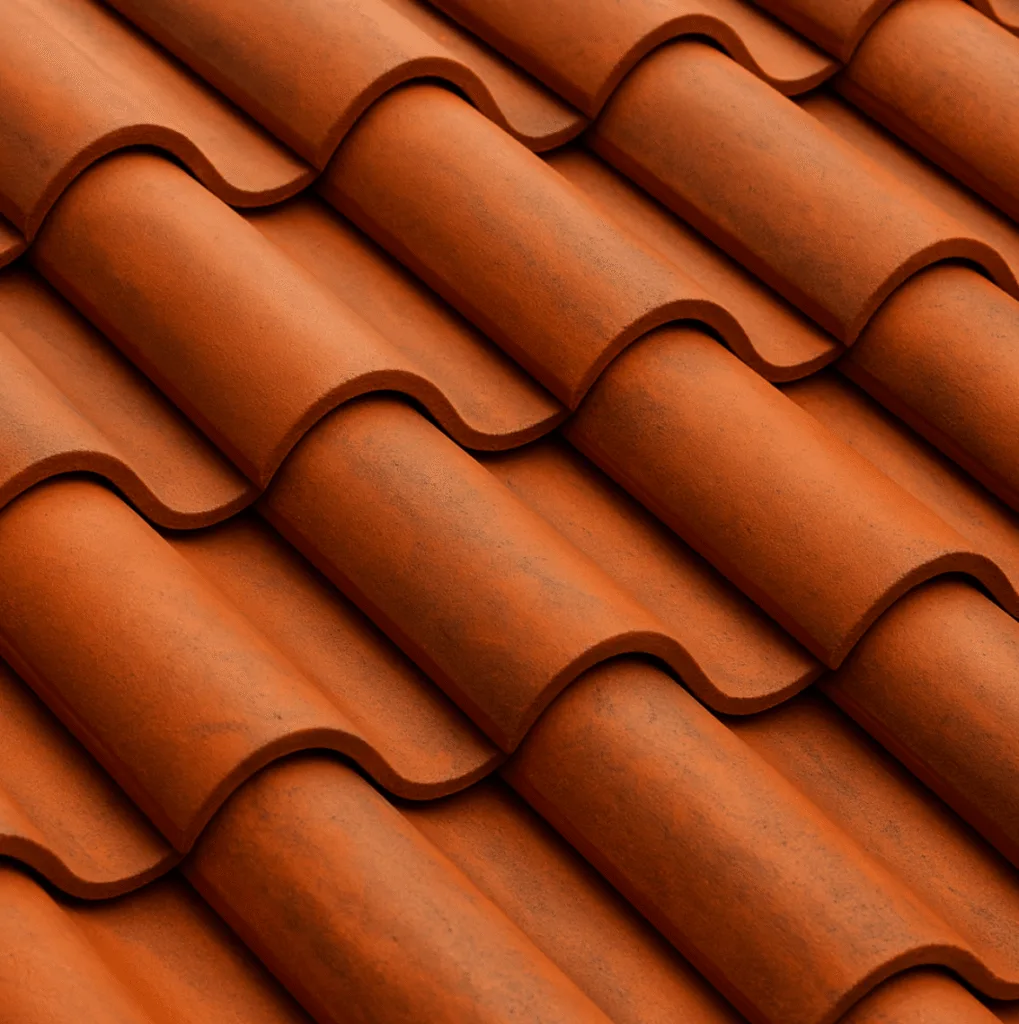
Traditional clay or concrete barrel tile is beautiful but weighs 900–1,200 lbs per square and is relatively brittle — walking on it for maintenance or installation causes breakage. Brava Barrel Tile replicates the curved Mediterranean profile at roughly 280 lbs per square, with Class 4 impact resistance that clay tile can’t match. Less common in the Pacific Northwest than Cedar Shake or Slate, but the right choice for homeowners with Spanish Colonial or Mediterranean-influenced architecture who want material durability matched to the aesthetic.
How Brava Composite Roofing Performs in the Pacific Northwest
Performance claims in roofing marketing are easy to make. Here’s what we’ve observed from installations across King and Pierce County over the past several years:
Moss and algae resistance
This is Brava’s most significant practical advantage in our climate. Moss grows on roofs by establishing root systems in organic material — wood fiber, decomposing debris, or the porous surface of natural slate. Brava’s composite surface doesn’t provide the organic substrate that moss needs to establish. We’ve inspected Brava roofs installed 10+ years ago in shaded lots with significant surrounding tree canopy — conditions that would have a cedar shake roof heavily moss-covered by that point — and found minimal surface growth that cleaned off easily. This alone changes the maintenance calculation dramatically compared to natural materials in Western Washington.
Class 4 impact resistance
All three Brava product lines carry Class 4 impact resistance — the highest classification for roofing materials under UL 2218 testing. This is meaningful in the Pacific Northwest where we see hail events, falling debris from trees, and significant wind-driven rain. Beyond the physical protection, Class 4 rated products often qualify homeowners for homeowner’s insurance discounts — worth confirming with your insurer.
Wind resistance
Brava products are rated for winds up to 110–160 mph depending on installation method. Pacific Northwest wind events, even significant ones, fall well within this range. We’ve had no wind-related failures on Brava installations in our service area.
Weight compatibility
At 230–280 lbs per square, Brava products are comparable in weight to asphalt shingles and significantly lighter than the natural materials they replicate. This means most standard residential structures can accommodate Brava without engineering review or structural modifications — a meaningful practical advantage over natural slate or tile.
Brava vs. Traditional Roofing Materials
| Material | Lifespan (PNW) | Maintenance | Weight (lbs/sq) | Moss risk | Upfront cost |
|---|---|---|---|---|---|
| Brava composite | 50+ yrs | Very low | 230–280 | Very low | $$$ |
| Cedar shake | 20–25 yrs | High — treat every 3–5 yrs | 250–350 | High | $$ |
| Natural slate | 75–100+ yrs | Low — but fragile | 700–1,500 | Low | $$$$ |
| Architectural asphalt | 20–30 yrs | Low-moderate | 230–300 | Moderate | $ |
| Metal roofing | 40–70 yrs | Very low | 50–150 | Low | $$$ |
The most relevant comparison for most homeowners considering Brava is against cedar shake — because that’s the material Brava Cedar Shake is most commonly replacing in the Pacific Northwest. Over a 50-year horizon, the math looks like this: cedar requires 2–3 full replacement cycles plus ongoing treatment costs, while Brava is designed as a one-time installation. The higher upfront cost of Brava typically breaks even against cedar on a 25–30 year timeline when maintenance is included.
For a deeper comparison of Brava against specific traditional materials, our Brava vs. traditional roofing materials guide covers each matchup in detail.
What Does Brava Composite Roofing Cost?
Brava is a premium product — it’s priced accordingly. Here are honest installed cost ranges for King and Pierce County in 2026:
| Product | Material cost (per sq) | Installed cost (per sq ft) | Typical 2,000 sq ft roof |
|---|---|---|---|
| Brava Cedar Shake | $350–$500 | $12–$18 per sq ft | $24,000–$36,000 |
| Brava Slate | $380–$520 | $13–$19 per sq ft | $26,000–$38,000 |
| Brava Barrel Tile | $400–$550 | $14–$20 per sq ft | $28,000–$40,000 |
Ranges reflect King and Pierce County 2026 for licensed, permitted installation including tear-off of existing roofing. Roof pitch, complexity, and accessory details (valleys, flashings, ridge caps) affect final cost.
A standard architectural shingle roof in our market runs $12,000–$22,000 installed and lasts 20–30 years. Over a 50-year horizon, that’s 2 replacements — $24,000–$44,000 plus labor price increases. A Brava roof at $24,000–$36,000 installed is typically the better 50-year investment, with the crossover point around year 25–30 depending on material escalation. The deciding factor is usually how long you plan to stay in the home and whether the premium aesthetic matters to you.
Is Brava Composite Roofing Right for Your Home?
Brava is the right choice for homeowners who check at least two of these boxes:
- You want the aesthetic of cedar shake, slate, or tile without the maintenance or structural demands of the natural material
- You’re planning to stay in the home for 15+ years and want a roof you install once
- You’re in a shaded lot with high moss risk and want to eliminate that maintenance cycle permanently
- Your HOA requires a specific roofing aesthetic that asphalt can’t replicate convincingly
- You’re replacing cedar shake and want the same visual character with significantly better performance
Brava is probably not the right choice if your primary driver is upfront cost — architectural asphalt shingles at $12,000–$22,000 installed deliver excellent 20–30 year performance at a fraction of the price. If longevity and maintenance reduction matter more than initial outlay, Brava earns its premium. If budget is the primary constraint, asphalt is the better call.
Ready to see what Brava would look like on your specific home? Our team provides free assessments across King and Pierce County, including product samples and side-by-side comparisons for all three Brava lines. Learn more about our Brava roofing installation services →
Considering Brava for your roof replacement?
Orca Roofing & Exteriors is a certified Brava installer serving Bellevue, Tacoma, Kirkland, and the broader Puget Sound. We’ve completed Brava installations across King and Pierce County and can provide real-project pricing, material samples, and an honest assessment of whether Brava is the right fit for your home. View our Brava installation services →
FAQs — Brava Composite Roofing
What is Brava composite roofing made of?
Brava roofing products are made from approximately 80% post-consumer recycled content — primarily rubber and plastic materials — combined with UV stabilizers and impact-resistant additives. The composite formula is engineered to replicate the appearance of natural cedar shake, slate, or Spanish barrel tile while delivering better performance in moisture-heavy climates like the Pacific Northwest.
How long does Brava composite roofing last?
Brava carries a 50-year manufacturer warranty on all three product lines. In Pacific Northwest conditions, the composite material’s resistance to moisture, moss, and UV degradation suggests it will perform at or near its warranted lifespan — unlike natural cedar shake, which typically reaches end-of-life at 20–25 years in our climate even with regular maintenance.
How much does Brava roofing cost per square foot?
Installed costs for Brava in King and Pierce County in 2026 run $12–$20 per square foot depending on the product line — Cedar Shake on the lower end, Barrel Tile on the higher end. A typical 2,000 square foot roof runs $24,000–$40,000 installed including tear-off. Material costs alone run $350–$550 per square depending on the product.
Does Brava roofing get moss in the Pacific Northwest?
Significantly less than natural roofing materials. Moss establishes on roofs by setting roots in organic material — wood fiber, debris, or porous stone. Brava’s composite surface doesn’t provide the organic substrate that moss needs. We’ve inspected Brava roofs in heavily shaded lots that show minimal moss growth after 10+ years — conditions under which cedar shake would be heavily covered and degraded by that point.
Is Brava better than asphalt shingles?
On most performance metrics, yes — Brava outlasts asphalt (50+ years vs. 20–30), resists moss better, and carries higher impact resistance. But “better” depends on your priorities. If upfront cost is the primary driver, asphalt at $12,000–$22,000 installed is significantly more affordable. If you want to install a roof once in the next 50 years and prefer the aesthetic of shake, slate, or tile over asphalt, Brava justifies its premium.
What is the difference between Brava Cedar Shake, Slate, and Barrel Tile?
All three are made from the same composite material and carry the same 50-year warranty and Class 4 impact rating. The difference is purely aesthetic and profile: Cedar Shake replicates dimensional wood shake texture, Slate replicates flat natural stone, and Barrel Tile replicates the curved Mediterranean profile of Spanish clay tile. Product selection is driven entirely by the architectural style of your home and your aesthetic preference.