
Orca Roofing & Exteriors is a licensed deck builder and deck contractor serving Seattle homeowners across King County. We build and replace decks of all sizes — from elevated installations on Queen Anne and Magnolia hillside lots to composite builds in Capitol Hill and the Central District — with transparent pricing, Seattle DCI permits handled, and no subcontracted crews.
The form that goes in all the locations
We are your licensed Seattle deck contractor, specializing in deck installation, replacement, and new construction for homes across King County — built for Pacific Northwest conditions and Seattle’s specific permitting requirements from day one.

Is your deck showing rot, structural instability, or simply past its useful life? We handle the full replacement and installation — demolition, permitting, framing, and finish work — with a single crew and one point of contact throughout.

Building from scratch? We assess your lot’s slope, drainage, setback requirements, and sun exposure, then design a deck that performs in Seattle’s climate and meets Seattle DCI permitting requirements — before a single board goes down.

Not sure if your deck needs repair or full replacement? We inspect the full structure — ledger board connection, post bases, joist condition, footing integrity — and give you a straight answer with no pressure to proceed.

Deck projects in Seattle require permits through the Seattle Department of Construction & Inspections — a more complex process than suburban King County with longer review timelines. We manage the full permit application, inspection schedule, and permit closure. You don’t manage a single form.
Seattle’s neighborhoods vary significantly in sun exposure, slope, and moisture conditions. For every deck installation in Seattle we assess those site-specific conditions first — from south-facing lots in Beacon Hill to shaded north-facing properties in Ravenna and steep hillside builds in Queen Anne and Magnolia. We work with five proven options and recommend each based on your lot — not on margin or availability.
Western red cedar is a viable choice for well-drained, south-facing Seattle sites with good sun exposure — Beacon Hill, Columbia City, and parts of the Central District often qualify. With biannual sealing, a cedar deck lasts 15–25 years. Not recommended for heavily shaded north-facing lots in Ravenna, Wedgwood, or the north slopes of Queen Anne — composite or PVC is the correct spec where chronic moisture is a factor.
The most widely installed composite brand in King County — fully wrapped, fade-resistant, and warranted for 25 years. Trex Transcend is our most commonly specified product for Seattle deck installations, particularly on shaded or north-facing lots where moss resistance matters most. Requires only annual cleaning. No staining, no sealing, no splinters. Our Trex decking cost guide covers pricing by board grade in detail.
Premium composite with advanced polymer shell — our recommendation for elevated structures on Seattle’s hillside lots in Queen Anne, Magnolia, and Capitol Hill where moisture exposure and structural complexity are highest. Lifespan of 25–50 years. TimberTech AZEK offers the most realistic wood-grain aesthetics in composite — important for homeowners in Seattle’s established neighborhoods replacing aging cedar decks.
100% synthetic — zero wood fiber, zero moisture absorption. The right choice for chronically shaded Seattle properties and elevated hillside builds where sustained moisture and minimal maintenance are priorities. The material we recommend without reservation for north-facing builds in Queen Anne, Magnolia, and North Capitol Hill.
As a preferred Aspire by Brava contractor, we install these slip-resistant composite pavers primarily for ground-level deck installations. Made from 95% recycled materials, they require virtually no maintenance and provide superior wet-surface traction — meaningful in Seattle’s nine-month wet season and on properties where moss and wet leaves create consistently slippery surfaces.
Not sure which material fits your project? Our complete decking material guide compares every option side by side with PNW-specific performance data.
Orca Roofing & Exteriors has been working as deck contractors in Seattle and King County for 6 years. We’re not a franchise with templated processes — we’re an independent licensed contractor who knows Seattle’s specific DCI permitting requirements, neighborhood slope conditions, and the material specs that perform in our climate. Every project gets one dedicated crew, one project manager on site, and fully itemized pricing before you commit to anything.
Our contractor license is verifiable at lni.wa.gov. We carry full liability and workers’ compensation coverage — you’re protected from day one, not just while we’re on site.
We build every deck for Western Washington’s climate — wet winters, UV summers, and everything in between. The materials we spec, the way we frame, and the details we focus on are all chosen for long-term performance in our specific conditions. Not built for a drier climate and hoped it holds up here.
Every estimate breaks down labor, materials with specific product names, permit fees, demolition if applicable, and cleanup. You see every line item before signing anything.
Your project manager is on site from structural assessment through final inspection. The crew building your deck is our crew — not a third party we have no control over mid-project.
Every Orca deck project follows the same four-step process — designed around Seattle DCI permitting timelines, Pacific Northwest site conditions, and your specific lot
We start with a full on-site structural assessment — not just a surface look. On replacement projects, we inspect the ledger board connection, post bases, joist condition, and footing integrity. On Seattle’s hillside lots in Queen Anne, Magnolia, and Capitol Hill, we also evaluate slope stability, drainage, setback requirements, and load requirements specific to elevated structures before any design is proposed. You get a straight answer on what the structure needs — and what it doesn’t.
Based on your site assessment, we walk you through material options — cedar, Trex, TimberTech, PVC, or Aspire Pavers — with honest recommendations based on your lot’s slope, shade level, moisture exposure, and neighborhood conditions. For Seattle’s north-facing hillside lots, we default to fully wrapped composite or PVC — cedar on a chronically shaded elevated site deteriorates significantly faster than on sunnier flat lots. You receive a fully itemized estimate with specific product names, permit fees, demolition costs if applicable, and cleanup.
We pull all required permits through the Seattle Department of Construction & Inspections and coordinate the full inspection schedule — you manage zero paperwork. Seattle DCI permit approval typically takes 4–8 weeks — longer than suburban King County due to higher review volume and more complex zoning requirements. We factor this into the timeline from day one.
Our crew builds with corrosion-resistant hardware rated for Pacific Northwest moisture exposure throughout — not standard steel that corrodes in 3–5 years in our climate. Every project closes with the required county inspection and our own walkthrough covering every connection, railing, and finish detail. The permit closes before we hand off the project.
Deck installation pricing in Seattle is driven by material choice, square footage, lot slope, and whether demolition is required. Hillside lots in Queen Anne, Magnolia, and Capitol Hill typically require additional engineering and taller post structures — which increases cost compared to flat-lot builds. These are honest installed cost ranges for licensed, permitted projects in Seattle:
| Installed Cost (per sq ft) | Project Type |
|---|---|
| $18–$28 per sq ft | Cedar or pressure-treated, ground-level, standard framing |
| $28–$42 per sq ft | Composite (Trex, TimberTech), standard complexity |
| $42–$65 per sq ft | Elevated builds, sloped lots, custom railings |
| $65–$85+ per sq ft | Multi-level, engineered footings, premium composite |
Demolition of an existing deck adds $3–$8 per sq ft. Seattle DCI permits run $800–$2,000 depending on scope and project complexity — higher than suburban King County. All Orca estimates are fully itemized — no surprises mid-project.
For a full breakdown, see our deck replacement cost guide
We build and replace decks throughout Seattle — including Queen Anne, Magnolia, Capitol Hill, Beacon Hill, Ballard, Ravenna, Wedgwood, Columbia City, Fremont, and the Central District. Looking for deck services in another part of the Puget Sound? We also serve:
Pierce County builds, waterfront properties, composite and PVC installs for high-moisture sites.
King County builds, hillside lots, composite and cedar installs for Eastside homeowners.
Lakefront and hillside builds across Kirkland and the North Eastside corridor.
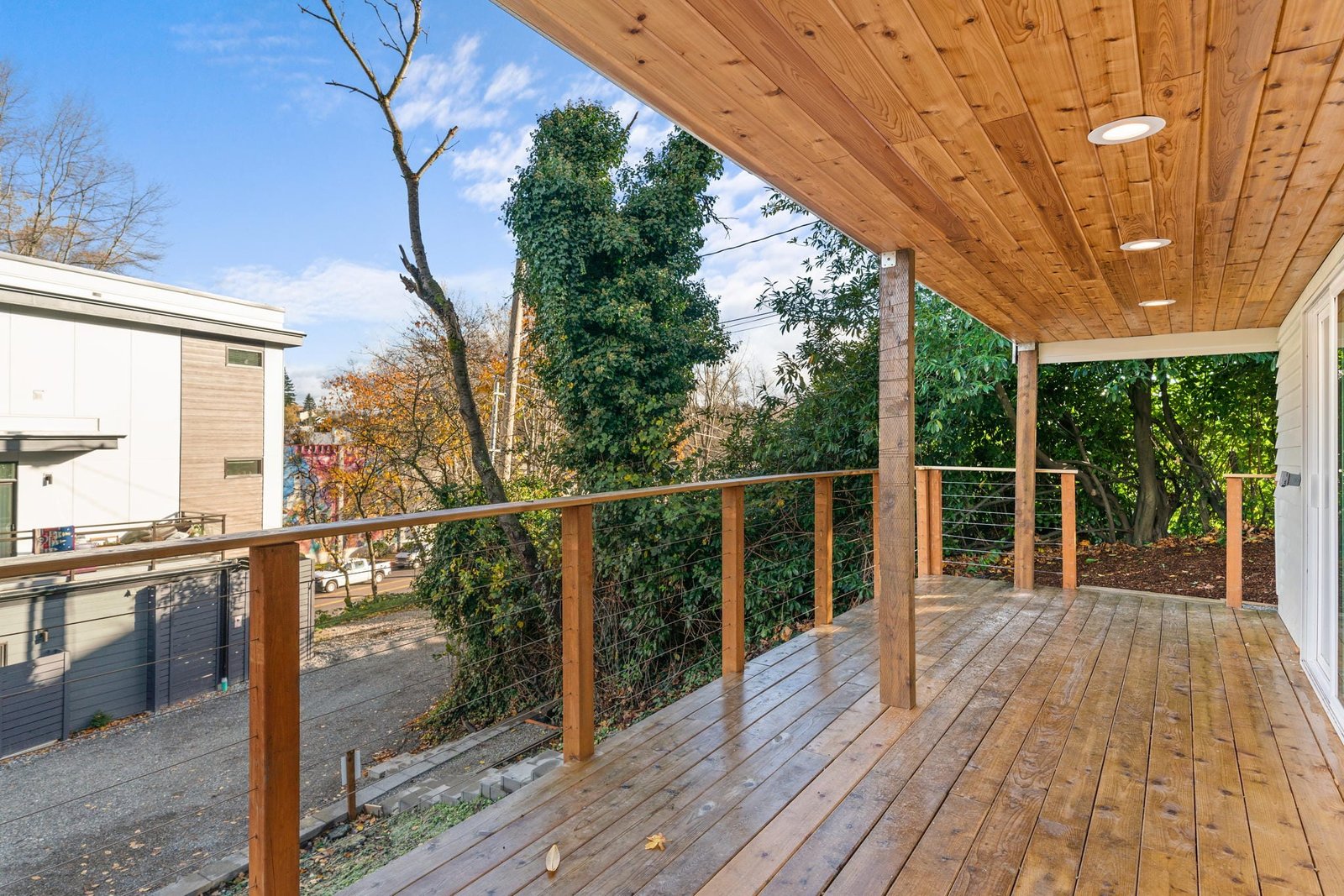
Whether you need deck installation, replacement, or a new build, Orca Roofing & Exteriors is the licensed deck contractor Seattle, WA homeowners trust — transparent pricing, Seattle DCI permits handled, and builds designed to last in the Pacific Northwest.
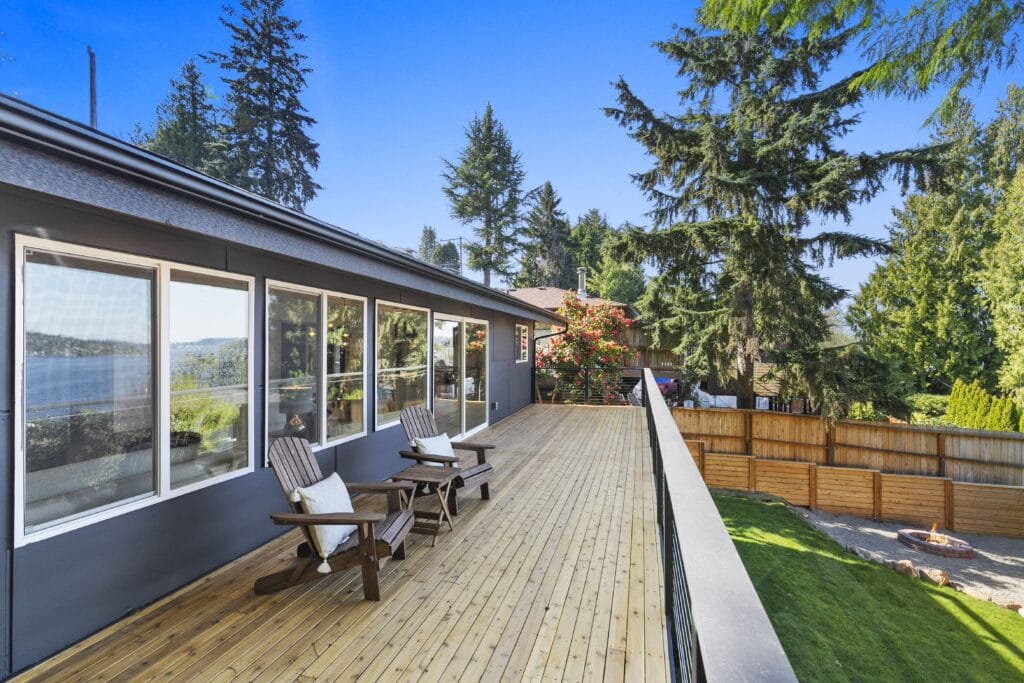
Deck installation in Seattle runs $18–$28 per square foot for cedar on flat well-drained sites, $28–$42 for composite (Trex, TimberTech), and $42–$65 or more for elevated hillside builds in Queen Anne, Magnolia, and Capitol Hill where slope engineering and taller post structures are required. Seattle DCI permits run $800–$2,000 — higher than suburban King County. Demolition adds $3–$8 per square foot. All Orca estimates are fully itemized. For more information visit our guide about the cost to replace a deck.
Seattle DCI permit approval for deck projects typically takes 4–8 weeks — significantly longer than suburban King County cities like Bellevue or Kirkland where timelines run 2–4 weeks. Seattle’s higher review volume and more complex zoning requirements, particularly for hillside lots, drive the longer timeline. We factor this into every project schedule and submit complete permit applications from day one to avoid revision loops.
Yes. Hillside builds in Queen Anne, Magnolia, Capitol Hill, and Beacon Hill are among our most common Seattle projects. These lots require structural engineering for taller post systems, engineered footings appropriate for slope and soil conditions, and drainage plans that Seattle DCI reviews as part of the permit process. We assess slope stability, setback requirements, and load calculations on the first site visit — before any design or estimate is proposed.
Fully wrapped composite — Trex Transcend or TimberTech AZEK — for most Seattle deck installations. PVC for north-facing hillside lots and any property with chronic moisture and minimal sun. Cedar works on south-facing flat sites in Beacon Hill, Columbia City, or parts of West Seattle with good drainage — but is not recommended for shaded north-facing lots in Ravenna or the north slopes of Queen Anne where moss growth and moisture retention accelerate deterioration significantly. For more information visit our guide in best decking material.
If the structural framing — joists, posts, and ledger board — is sound, repairs can add 10–15 years. If the deck is over 15 years old, damage appears in multiple areas, or repair costs approach 50–60% of replacement, full replacement is smarter. On Seattle’s hillside lots, older decks in Queen Anne and Magnolia were often built before current structural requirements and may need a full rebuild to pass permit inspection at resale. Check our guide in repair or replace a deck.
es. Our deck contractors serve all Seattle neighborhoods — Queen Anne, Magnolia, Capitol Hill, Beacon Hill, Ballard, Fremont, Ravenna, Wedgwood, Columbia City, the Central District, and West Seattle. Each neighborhood has distinct lot conditions and permitting considerations: Queen Anne and Magnolia hillside lots require slope engineering and longer DCI timelines, Beacon Hill and Columbia City often allow cedar on south-facing sites, and Ravenna and Wedgwood’s shaded lots are composite or PVC installs by default.