Eco-Friendly Roofing: The Smart, Sustainable Way to Top Your Home
Choosing a roof isn’t just about looks or lifespan anymore—homeowners today are also considering their environmental footprint. Whether you’re building new or replacing an old roof, eco-friendly roofing offers long-term savings, reduced waste, and better energy performance.
In this guide, we’ll explore the most sustainable roofing options on the market, from solar shingles to recycled tiles. You’ll learn how each material affects energy efficiency, durability, and your home’s long-term environmental impact—plus how to choose the right solution for your climate and budget.
Looking for a side-by-side comparison of all major roofing types? Check our roofing guide here
Eco-Friendly Roofing Options at a Glance
| Material | Eco Rating | Lifespan | Installed Cost (PNW) | Best For |
|---|---|---|---|---|
| Metal Roofing | ⭐⭐⭐⭐⭐ | 40–70 years | $14,000–$28,000 | Long-term investment, low moss risk |
| Brava Composite Tile | ⭐⭐⭐⭐⭐ | 50+ years | $22,000–$40,000+ | Premium homes, historic aesthetics |
| Solar Shingles | ⭐⭐⭐⭐⭐ | 25–30 years | $40,000–$70,000+ | Energy generation + roof protection |
| Algae-Resistant Asphalt | ⭐⭐⭐ | 25–30 years | $8,000–$18,000 | Budget-conscious, most common upgrade |
| Green / Living Roof | ⭐⭐⭐⭐⭐ | 40+ years | $20,000–$50,000+ | Flat roofs, LEED-certified homes |
Eco-Friendly Roofing in the Pacific Northwest: What Works Here
Not all eco-friendly roofing advice translates directly to the Pacific Northwest. Puget Sound’s climate — over 37 inches of annual rainfall, sustained moisture October through May, and significant biological growth pressure — changes which materials actually deliver on their green promises over time.
Here’s what we see in the field across Bellevue, Seattle, Tacoma, and the broader South Sound:
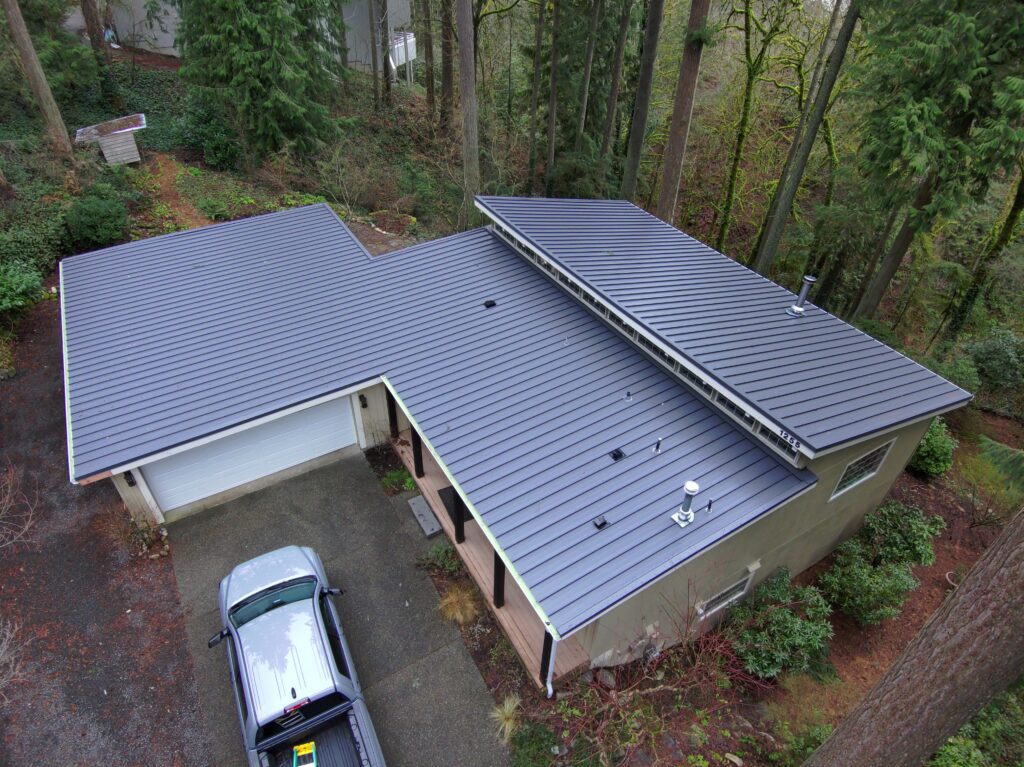
Metal Roofing — The Best Long-Term Eco Investment in the PNW
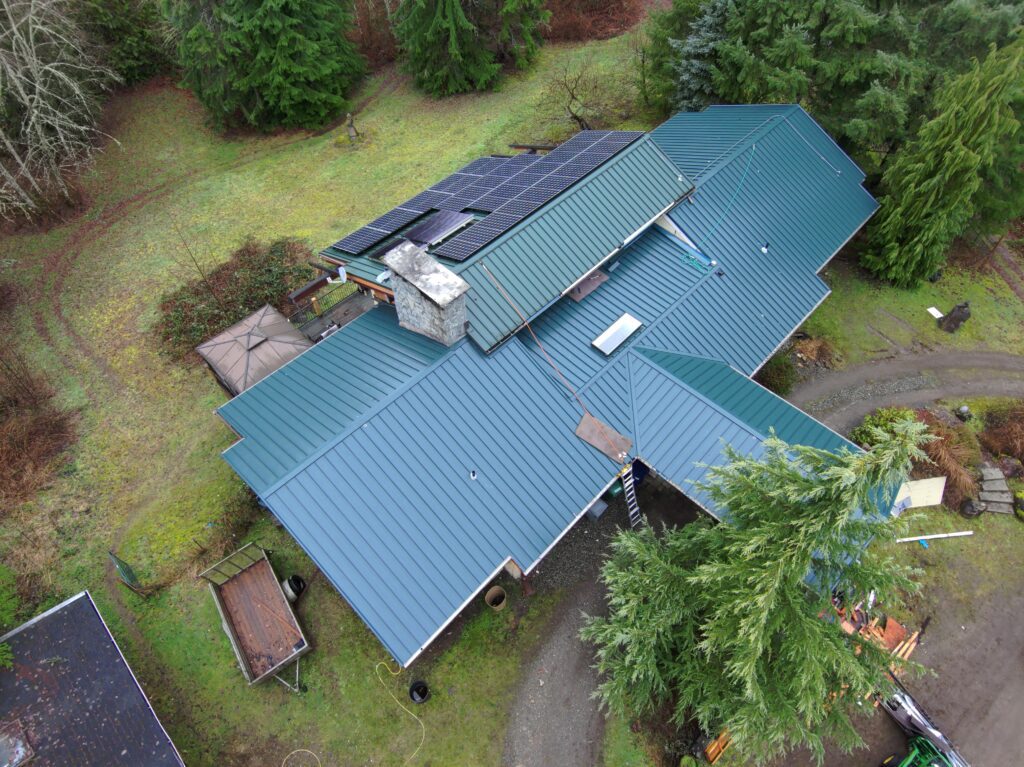
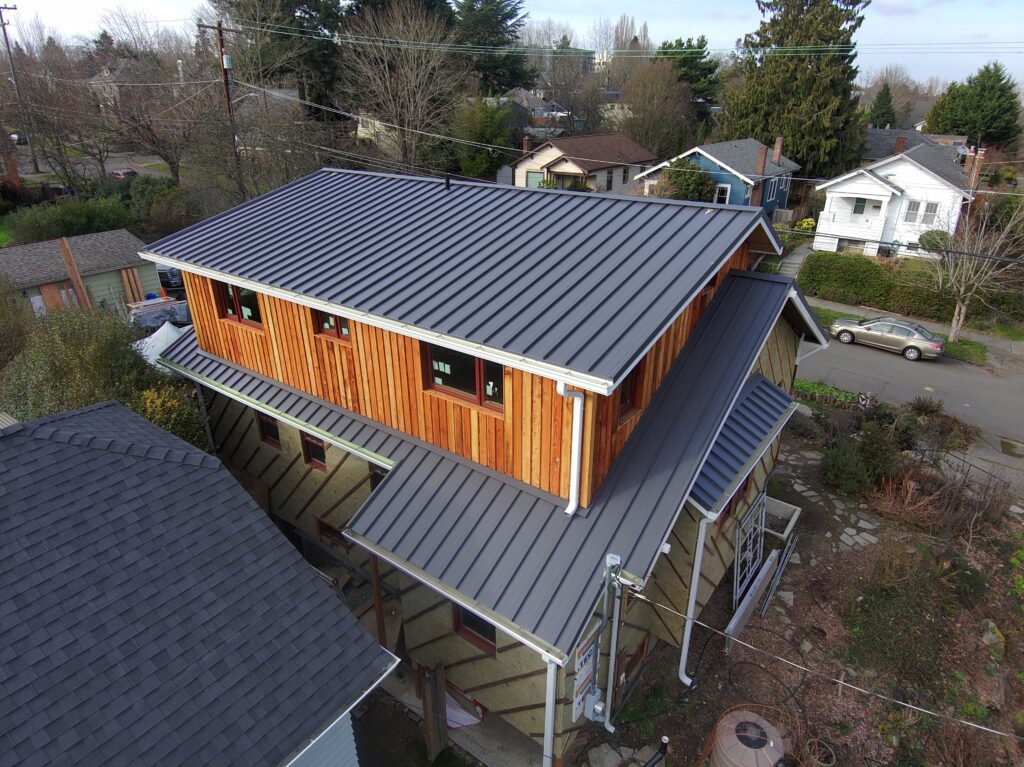
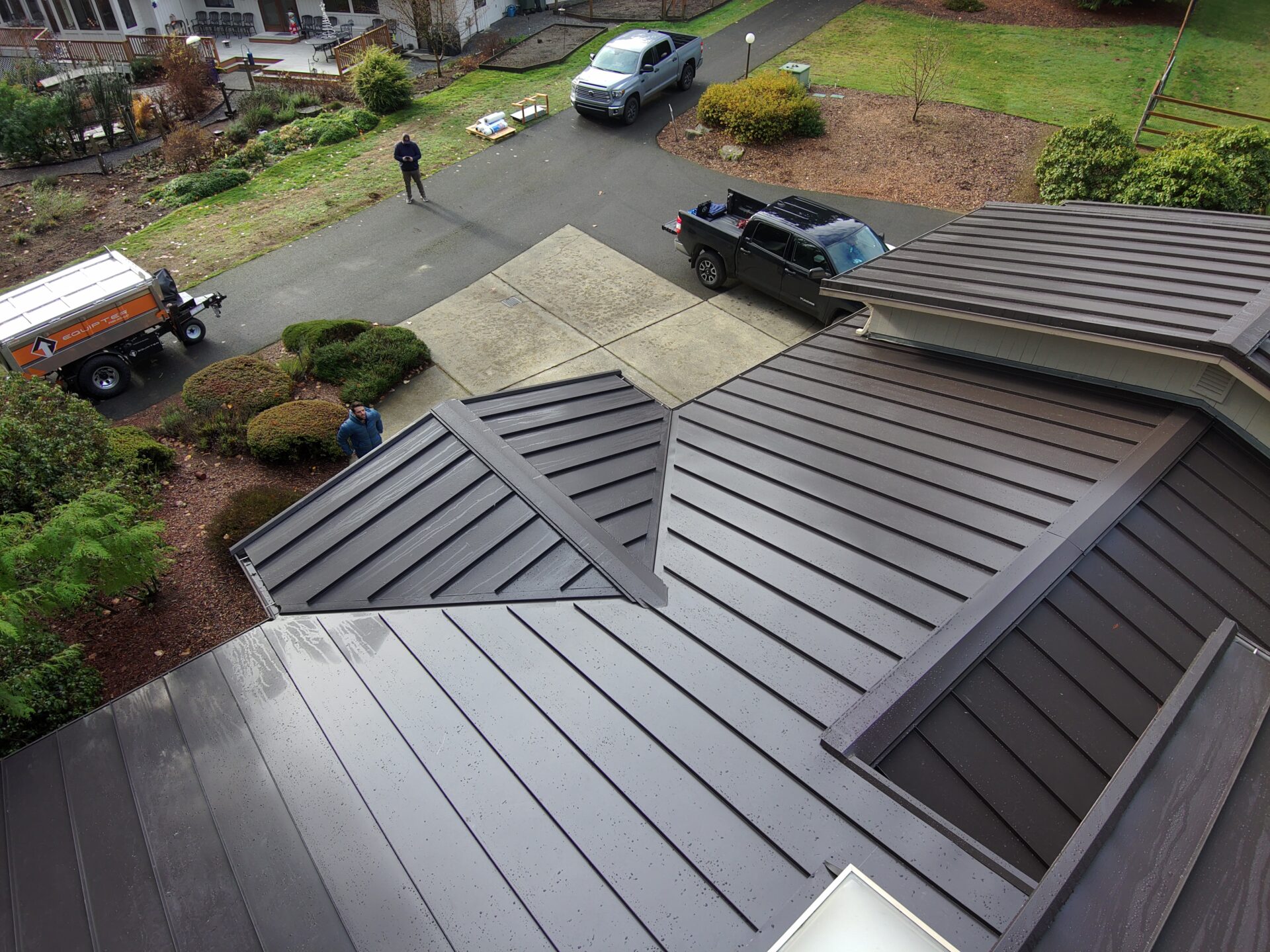
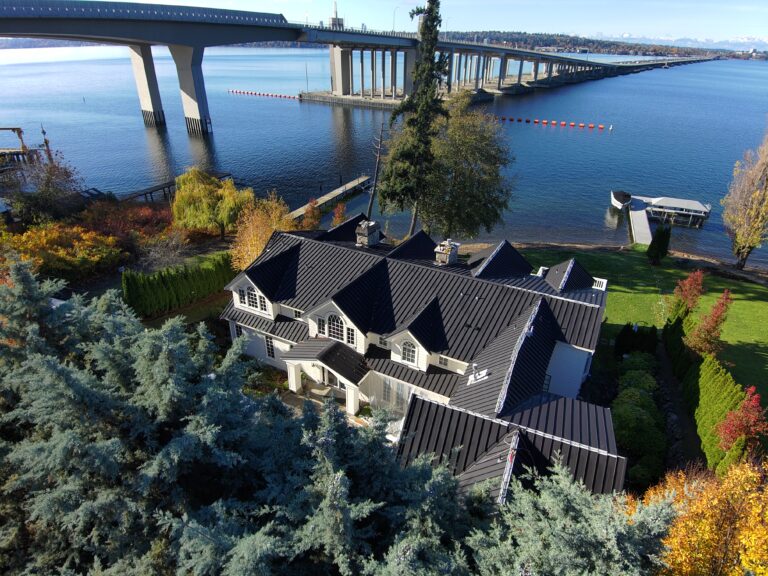
In the Pacific Northwest, metal roofing’s eco credentials go beyond recycled content. Its zero-moss performance is arguably its biggest environmental advantage here — no chemical treatments needed, no premature replacement, no shingle waste in landfills every 20–25 years. A standing seam metal roof installed in Bellevue today will likely outlast the home’s next two owners. For homeowners committed to the lowest lifetime environmental footprint, metal roofing is the clear choice in our climate.
Brava Composite Tile — Sustainable Without Sacrificing Aesthetics
Brava’s post-consumer recycled plastics story resonates particularly well in the PNW, where homeowners tend to prioritize both sustainability and architectural character. It performs exceptionally well in our wet climate — Class A fire rating, impact resistance, and zero organic material that moss and algae can colonize. For historic neighborhoods in Seattle’s Capitol Hill, Tacoma’s Stadium District, and Bellevue’s older Eastside properties, Brava tile delivers premium aesthetics alongside genuine sustainability credentials.
Solar Shingles — Viable in the PNW With the Right Orientation
The PNW’s reputation for clouds leads many homeowners to dismiss solar entirely — but modern photovoltaic technology generates meaningful energy even in diffuse light. The key qualifier in our region is roof orientation: south or west-facing roofs in Bellevue, Sammamish, and the Eastside generate substantially more than north-facing roofs in tree-heavy neighborhoods. If your home qualifies on orientation, the combination of federal tax credits and Washington State’s net metering makes solar shingles a genuinely compelling option.
Algae-Resistant Asphalt — The Most Accessible Eco Upgrade
For homeowners not ready for the premium investment of metal or Brava, upgrading to algae-resistant asphalt shingles (GAF Timberline HDZ or CertainTeed Landmark with StainGuard Plus) is the most practical eco improvement available in the PNW. Eliminating annual chemical moss treatments reduces the chemical runoff that ends up in Puget Sound’s waterways — a meaningful local environmental benefit that standard shingles don’t provide. It’s the right entry-level eco choice for most Tacoma and South Sound homeowners on a budget. See our roof replacement page for current pricing and material options.
What Makes a Roof Eco-Friendly?
An eco-friendly roof is one that:
- H3: Reduces environmental impact during manufacturing
- H3: Improves energy efficiency during its lifespan
- H3: Is recyclable or sustainably sourced
- H3:Requires fewer replacements over time
Not all “green” roofs look the same—some are high-tech, like solar shingles; others rely on natural or recycled materials. Let’s look at the top options.
Solar Shingles: Power + Protection in One Roof
Solar shingles are a cutting-edge option in eco-friendly roofing. These systems generate renewable energy while acting as your roof’s outer layer—offering protection, performance, and a sleek look all in one.
Perfect for sun-facing homes, they reduce utility bills and qualify for green energy incentives. While the upfront cost is higher, solar shingles are a long-term investment in both sustainability and home efficiency.
Metal Roofing: Recyclable and Long-Lasting
Metal roofing is one of the most popular choices in eco friendly roofing for good reason. Not only does it last two to three times longer than asphalt shingles, but it’s also made with up to 95% recycled content—and can be recycled again at the end of its life.
In hotter climates, metal roofs with reflective coatings reduce cooling needs, helping homeowners cut down on energy usage. If you’re planning to stay in your home long-term and want a sustainable roofing solution that stands up to wildfire and extreme weather, metal roofing is a smart investment that pays off for decades.
Brava Roof Tile: Sustainable Luxury with a Modern Edge
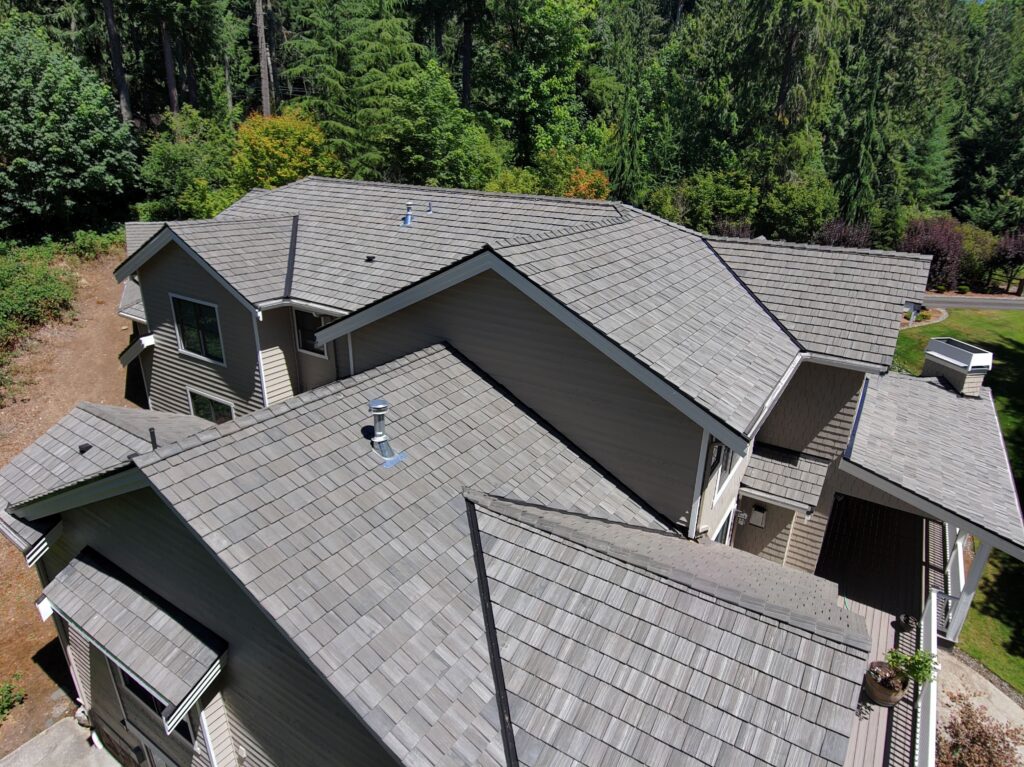
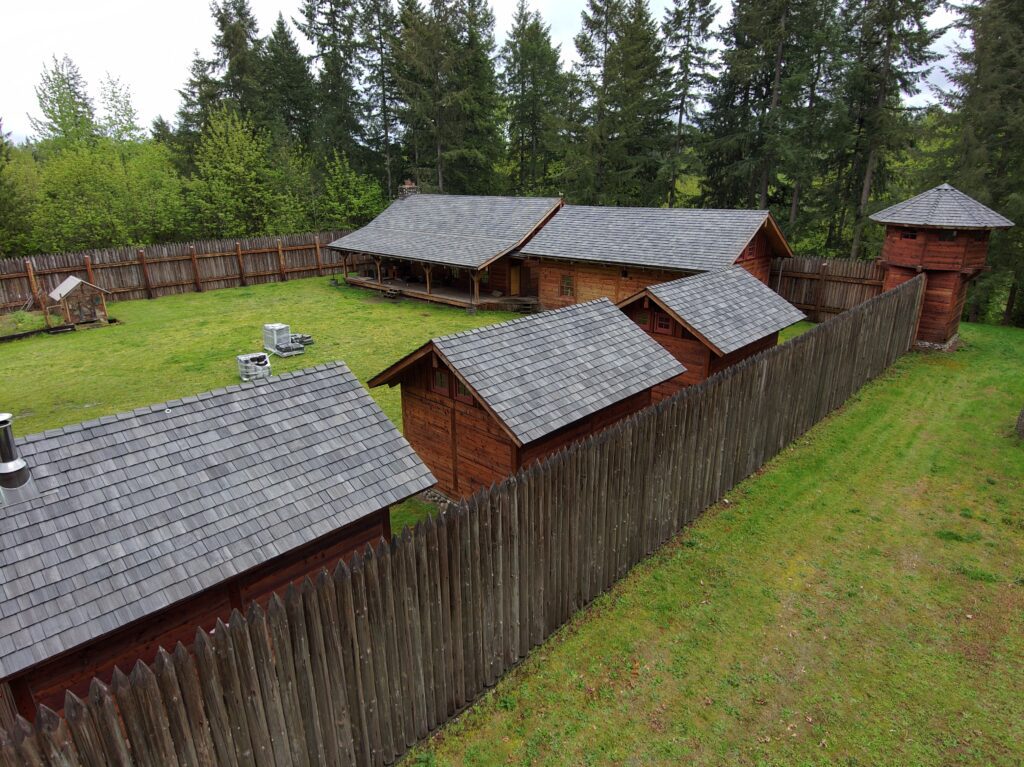
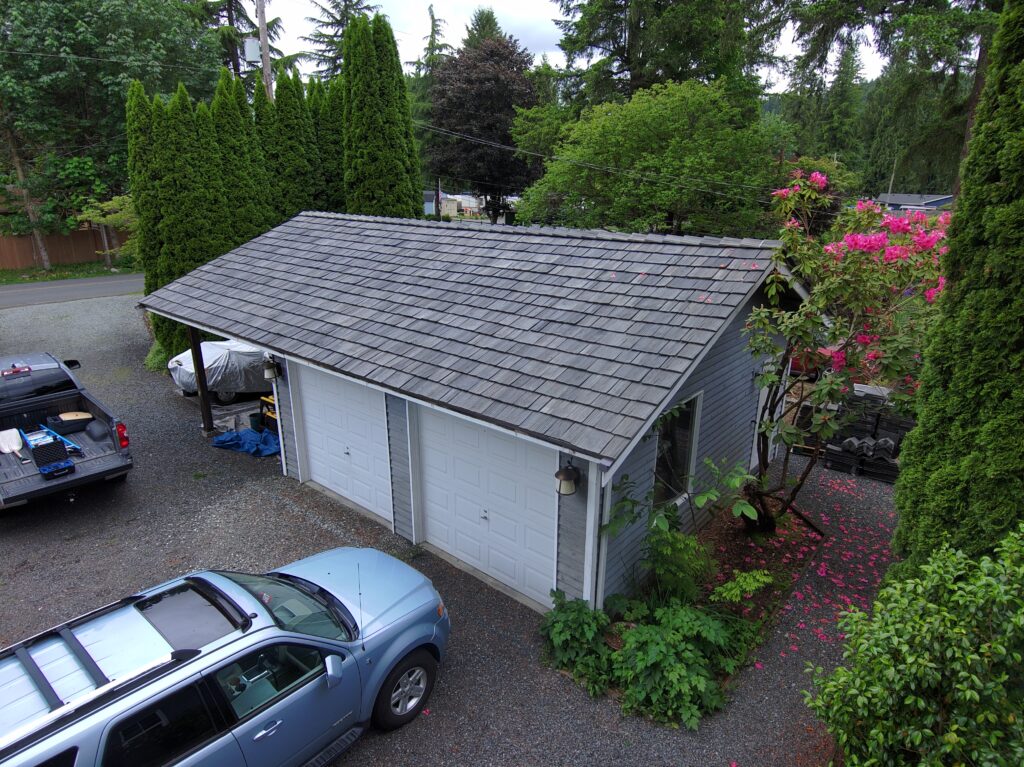
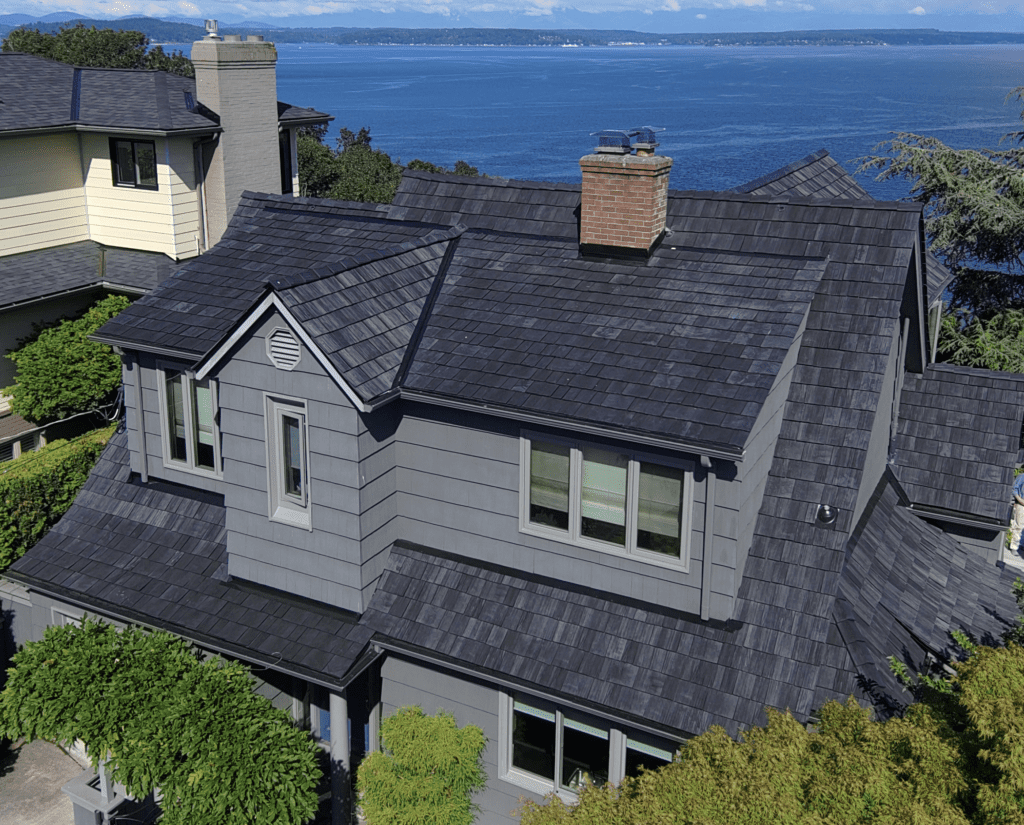
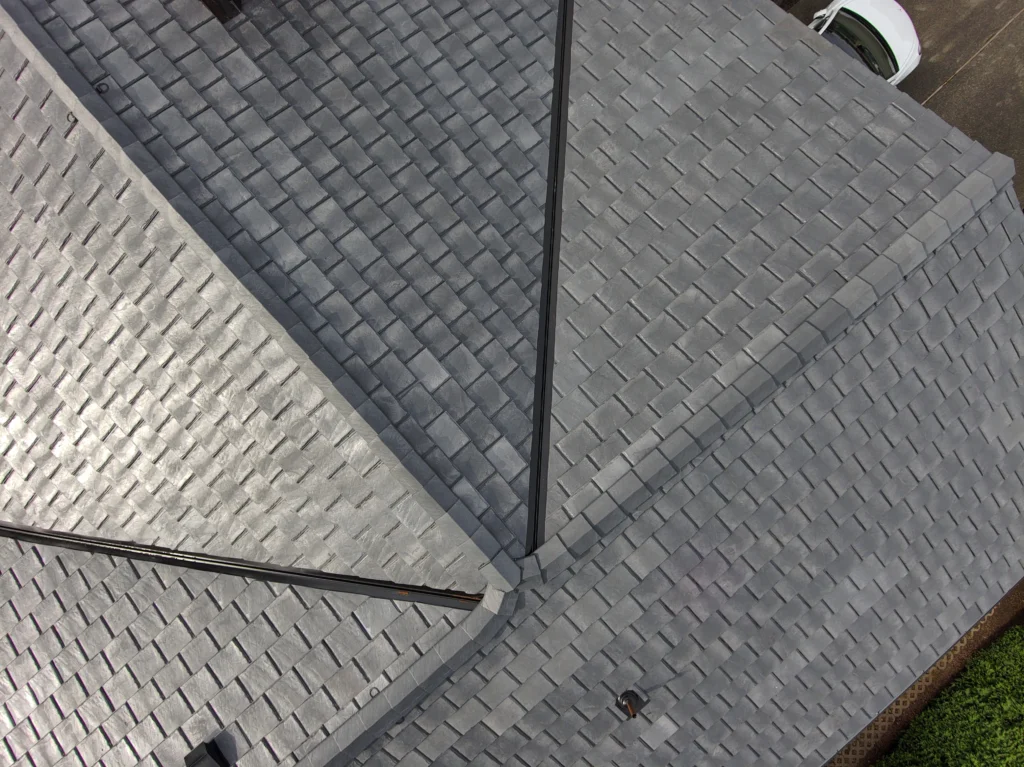
Brava roof tiles deliver the high-end look of slate, cedar shake, or Spanish tile—without the weight or environmental impact. Made from post-consumer recycled plastics, they’re lightweight, durable, and reduce both transport emissions and structural strain.
This material is engineered for longevity, with strong UV resistance, Class A fire ratings, and storm durability. For homeowners who want an elegant design that supports eco friendly home building, Brava is a smart alternative to resource-heavy traditional materials.
Green Roofing Systems: Living Roofs for Urban Efficiency
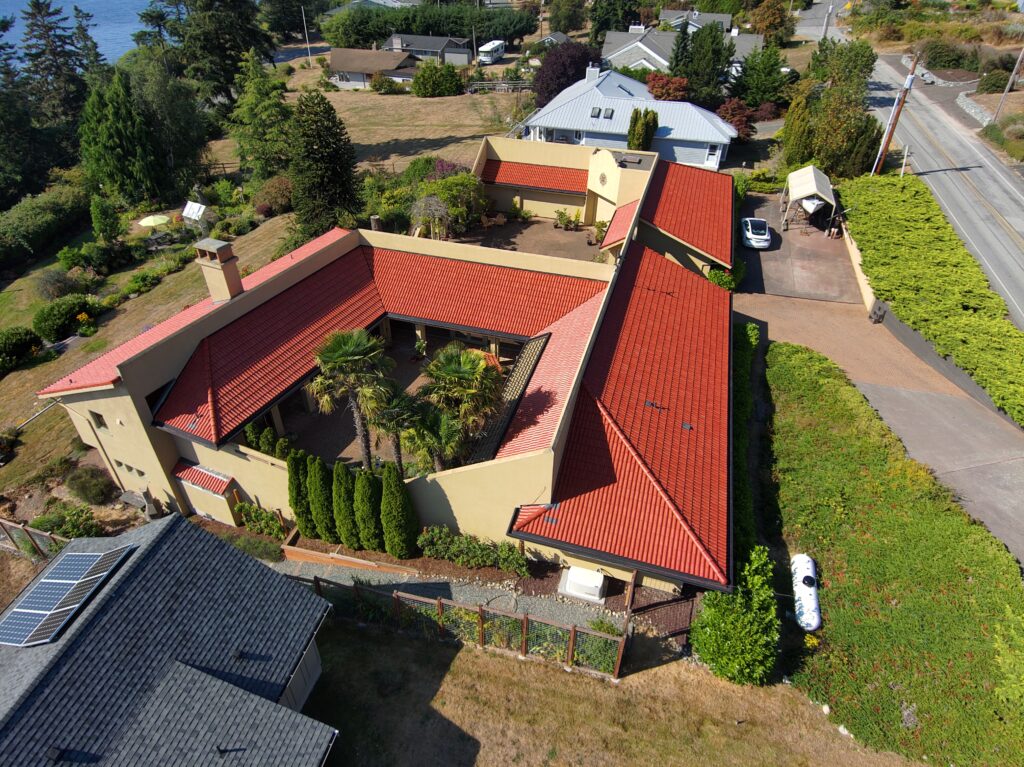
For those interested in the most advanced eco-friendly roofing options, green roofs—also called living roofs—offer a unique solution. These systems involve growing vegetation over a waterproof membrane, transforming your roof into a functioning ecosystem.
They help absorb stormwater, reduce urban heat, and even improve air quality. While they require specialized installation and structural support, green roofs are ideal for flat rooftops and high-performance homes aiming for net-zero or LEED certification.
How to Choose the Right Eco-Friendly Roof
When comparing eco-friendly roofing materials, consider:
- Your climate: Reflective materials are better for warm regions, while insulation is key in cold climates.
- Your budget: Solar and Brava tiles are costlier upfront but offer long-term returns.
- Your home’s structure: Some roofs (like tile or green systems) require reinforcements.
- Your long-term plans: Choose longevity if you plan to stay in your home.
Eco-Friendly Roofing Costs in the Pacific Northwest (2026)
These are honest installed cost ranges for licensed, permitted projects in King County and Pierce County — not national averages, not material-only costs. Prices vary by roof size, pitch, access complexity, and whether tearoff of an existing roof is required.
| Material | Installed Cost Range | Tearoff (if needed) | Permits (King/Pierce County) | Expected Lifespan in PNW |
|---|---|---|---|---|
| Algae-Resistant Asphalt | $8,000–$18,000 | $1,500–$3,500 | $300–$800 | 25–30 years |
| Metal (Standing Seam) | $14,000–$28,000 | $1,500–$3,500 | $300–$800 | 40–70 years |
| Brava Composite Tile | $22,000–$40,000+ | $1,500–$4,000 | $300–$800 | 50+ years |
| Solar Shingles | $40,000–$70,000+ | Included | $500–$1,500 | 25–30 years (panels) |
| Green / Living Roof | $20,000–$50,000+ | $1,500–$4,000 | $500–$1,500 | 40+ years (membrane) |
All Orca estimates are fully itemized — specific materials, labor, permits, tearoff, and cleanup broken down line by line. For a detailed cost breakdown for standard roof replacement in Puget Sound, see our roof replacement cost guide.
Final Thoughts on Sustainable Roofing
Going green with your roof isn’t just good for the planet—it’s a smart, long-term investment in your home’s energy efficiency, durability, and value.
At Orca Roofing & Exteriors, we stay at the forefront of eco friendly roofing solutions in the Pacific Northwest. Whether you’re interested in solar shingles, Brava roof tile, or metal systems made from recycled materials, our team helps you choose a sustainable option that fits your home, your goals, and your budget.
Explore your eco-friendly roofing options with Orca—contact us today for expert guidance and a personalized estimate.
FAQ – Eco Friendly Roofing
What is the most eco-friendly roofing material?
Metal roofing is widely considered the most eco-friendly roofing material available — it’s made with up to 95% recycled content, lasts 40–70 years (two to three times longer than asphalt), and is fully recyclable at the end of its life. In the Pacific Northwest specifically, metal’s zero-moss performance is an additional environmental advantage: no chemical treatments required, no premature replacement, no shingle waste in landfills every 20–25 years. Other strong options include Brava Roof Tile (made from post-consumer recycled plastics, 50+ year lifespan), solar shingles (generate renewable energy while protecting the roof), and green roofs (reduce stormwater runoff and urban heat). The best option depends on your home’s structure, climate, and long-term sustainability goals.
Are solar shingles worth it in the Pacific Northwest?
Yes — with the right roof orientation. The Pacific Northwest’s reputation for clouds leads many homeowners to dismiss solar entirely, but modern photovoltaic technology generates meaningful energy even in diffuse light. The key qualifier in our region is orientation: south or west-facing roofs in Bellevue, Sammamish, and the Eastside generate substantially more than north-facing roofs in heavily treed neighborhoods. For qualifying homes, Washington State’s net metering program combined with the federal 30% Investment Tax Credit makes solar shingles a financially compelling option — typical payback periods in Puget Sound run 10–15 years, after which the energy generation is essentially free. If your home has good orientation and minimal tree cover, solar shingles are worth a serious evaluation. We can assess your roof’s solar potential as part of any roof replacement consultation.
How do I know if a roofing material is sustainable?
A sustainable roofing material typically meets several criteria: it’s made from recycled or renewable materials, it’s recyclable or biodegradable at the end of its life, it improves your home’s energy efficiency, and — critically — it lasts long enough that replacement waste doesn’t offset its environmental benefits. Look for third-party certifications like ENERGY STAR, Cradle to Cradle, or ICC-ES reports. In practical terms, the single biggest driver of a roofing material’s lifetime environmental footprint is how often it needs to be replaced: a metal roof that lasts 50 years generates a fraction of the manufacturing and disposal impact of two rounds of asphalt shingles over the same period — even if the asphalt has higher recycled content per unit.
Is eco-friendly roofing more expensive?
Upfront, yes — most eco-friendly roofing materials cost more than standard asphalt shingles. In the Pacific Northwest, installed costs run approximately $14,000–$28,000 for metal roofing, $22,000–$40,000+ for Brava composite tile, and $40,000–$70,000+ for solar shingles on a typical 1,500–2,500 sq ft home. Standard algae-resistant asphalt — the most accessible eco upgrade — runs $8,000–$18,000. However, the long-term math often favors the premium materials: a metal roof installed once at $22,000 typically costs less than replacing asphalt twice over 50 years at $14,000 per replacement, plus the ongoing maintenance costs. Solar shingles add energy savings on top of that equation. Most eco-friendly materials also qualify for federal tax credits, Washington State rebates, or utility incentives that reduce the effective upfront cost. For a full cost breakdown, see our roof replacement cost guide.
What is the best eco-friendly roofing for the Pacific Northwest?
For most Puget Sound homeowners, metal roofing delivers the best combination of environmental performance and long-term value. Puget Sound’s sustained rainfall, moss pressure, and biological growth conditions mean that materials requiring chemical treatments or frequent replacement have a higher real-world environmental cost than their specs suggest. Metal requires no chemical moss treatments — a meaningful benefit for the watershed — lasts 40–70 years, and is made with up to 95% recycled content. For premium homes where aesthetics are the priority, Brava composite tile is the top choice — post-consumer recycled plastics, 50+ year lifespan, and full compatibility with Puget Sound’s wet climate. For homeowners focused on energy generation, solar shingles on south or west-facing roofs in Bellevue, Sammamish, and the Eastside are a compelling option. We serve homeowners across Bellevue, Seattle, Tacoma, and throughout Puget Sound — contact us for a free on-site assessment.