Roof damage is stressful enough—adding insurance uncertainty on top of it can make the situation even more overwhelming. One of the most common questions homeowners ask after noticing roof damage is whether homeowners insurance covers roof replacement.
The short answer is: sometimes. Coverage depends on what caused the damage, the condition and age of your roof, and the details of your insurance policy. This guide explains when insurance typically applies, when it doesn’t, and how to approach the process with realistic expectations—so you can make informed decisions without pressure or surprises.
When Homeowners Insurance Typically Covers Roof Replacement
In most cases, homeowners insurance covers roof replacement only when the damage is caused by a sudden, covered event, not by normal wear and tear.
Common covered events may include:
- Wind damage from severe storms
- Hail damage that compromises shingles or roofing materials
- Falling trees or debris during storms
- Fire or other unexpected accidents
If a covered event damages your roof beyond repair, insurance may pay for part or all of the replacement—depending on your policy terms and deductible.
When Roof Replacement Is Usually Not Covered
Insurance policies are designed to cover unexpected damage, not aging or neglected roofing systems. Roof replacement is typically not covered when damage is related to:
- Normal wear and tear over time
- Lack of routine maintenance
- Aging roofs near the end of their lifespan
- Pre-existing damage that worsened gradually
This is where many homeowners are caught off guard. Even if a roof is leaking, insurance may deny coverage if the issue is traced back to age or long-term deterioration rather than a specific event.
To better understand how roof age plays a role, see our guide on how often a roof typically needs replacement.
How Roof Age and Materials Affect Insurance Coverage
Roof age is one of the biggest factors insurers consider when evaluating claims. Older roofs are more likely to receive partial coverage or be reimbursed based on depreciated value rather than full replacement cost.
Some policies pay Actual Cash Value (ACV), which accounts for depreciation, while others offer Replacement Cost Value (RCV), which covers the cost of replacing the roof with similar materials. The difference can significantly impact out-of-pocket expenses.
Roofing materials also matter. Durable systems like metal or premium composite roofing often perform better in storms, which can influence claim outcomes and long-term insurability.
How the Insurance Roof Claim Process Usually Works
While every insurer handles claims slightly differently, the process generally follows these steps:
- Damage occurs due to a covered event
- Inspection is scheduled to assess visible and hidden damage
- An insurance adjuster evaluates the roof and determines coverage
- The insurer issues an estimate or decision
- Approved claims move forward with repairs or replacement
Timing matters. Waiting too long to report damage can complicate claims or lead to denials, especially if additional deterioration occurs after the initial event.
Common Insurance Roof Claim Mistakes Homeowners Make
Homeowners often run into issues not because coverage doesn’t exist—but because of avoidable mistakes, such as:
- Waiting too long to report damage
- Failing to document storm-related issues
- Assuming insurance will cover aging-related problems
- Skipping professional inspections before filing a claim
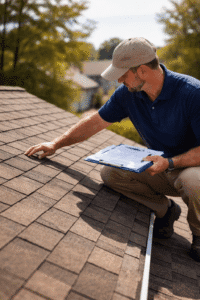
A professional roof inspection can help determine whether damage is likely claim-related before you move forward.
Should You Talk to a Roofer Before Filing an Insurance Claim?
Yes—but with the right expectations.
A reputable roofing contractor won’t promise coverage or push unnecessary claims. Instead, they’ll provide an honest assessment of your roof’s condition and explain whether the damage appears consistent with a covered event.
This kind of transparency helps homeowners avoid filing claims that are likely to be denied—and protects long-term insurability.
For related warning signs, see: Signs You Need a New Roof
When Insurance Isn’t an Option
If insurance doesn’t apply, that doesn’t mean you’re out of options. Many homeowners plan roof replacement proactively once repairs no longer make sense, avoiding emergency situations and rushed decisions.
Understanding replacement timelines, materials, and maintenance expectations can help you plan confidently—even without insurance involvement.
Final Thoughts
Homeowners insurance can cover roof replacement in certain situations—but it isn’t a blanket solution. Coverage depends on cause of damage, roof condition, materials, and policy details. Knowing what to expect before filing a claim helps you avoid frustration and make smarter decisions for your home.
If you’re dealing with roof damage and aren’t sure whether insurance applies, a professional inspection can help clarify your options. Contact Orca Roofing & Exteriors for honest guidance and a clear assessment—no pressure, no guesswork.